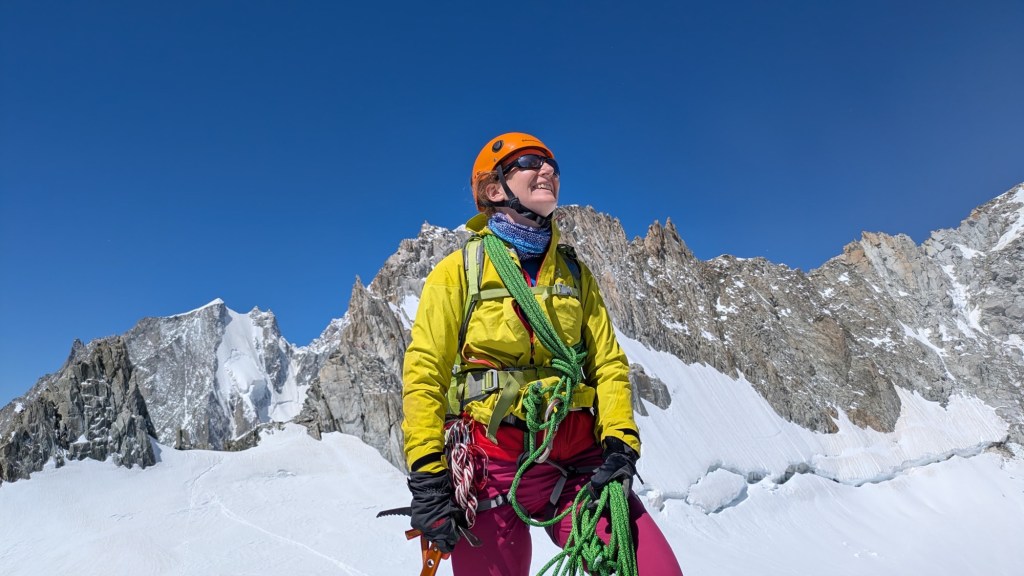
A mountaineer? Well, who knows who gets to call themselves a mountaineer. I’m absolutely not any sort of Alpine or rock pro – far from it: even at my strongest I’ve only ever been a very average amateur.
I do, though, think of myself as ‘a mountaineer’. Mostly, it’s that I shape my sense of self around the experience of mountains. They’ve provided the backdrop for the greatest highs in my life – across the UK, Alps, Pyrenees and Himalaya. Rock climbing has been my mindfulness. Solo bivvies have been my peace. Technical peaks have been a way of pushing myself, a test of endurance that I can bring back with me to sea-level life.
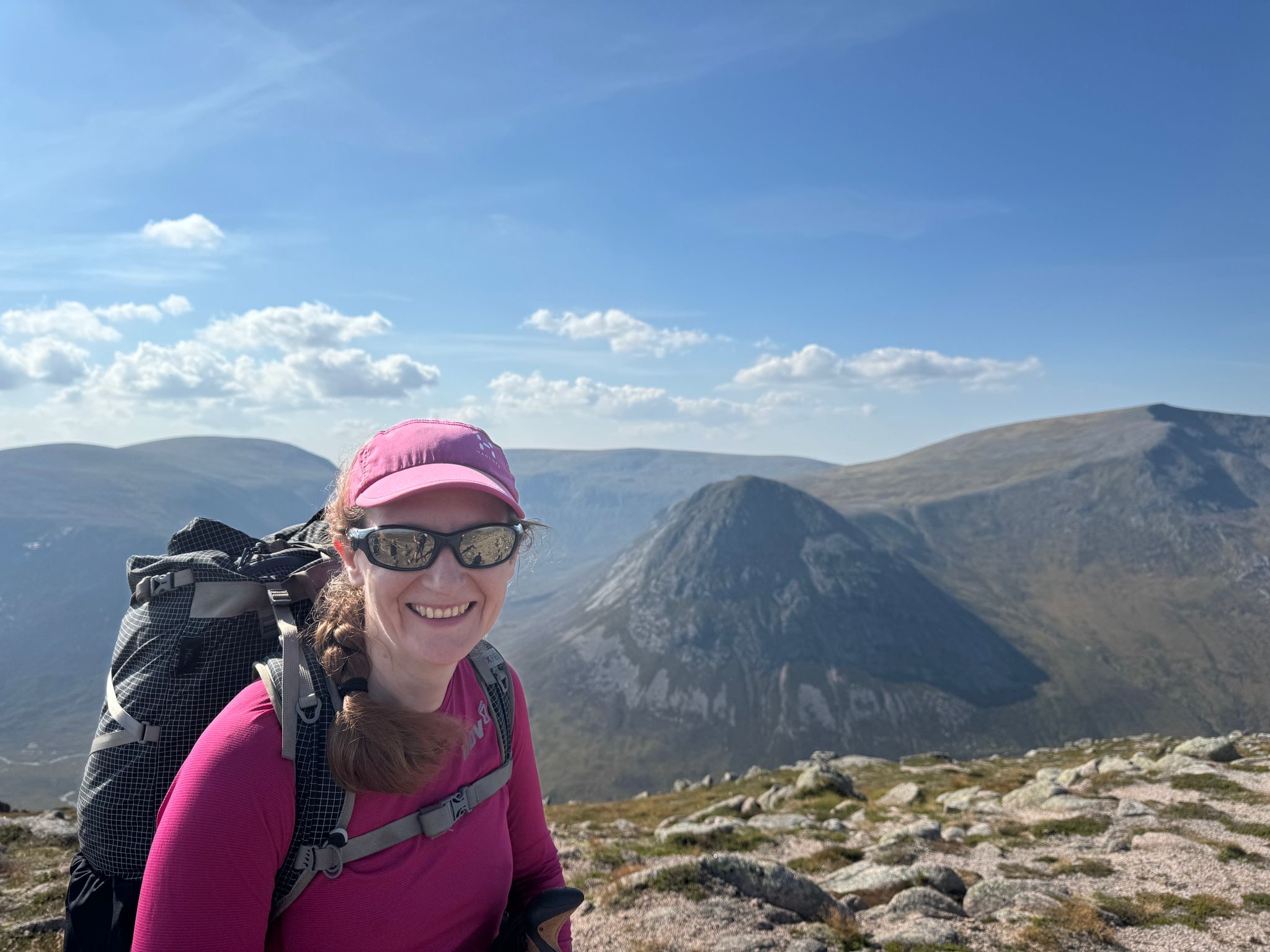
And mountains have also been the source of the most horrific pain: my husband died following a climbing fall in 2019, and only two months earlier I’d been a client on a Himalayan expedition which ended in tragedy.
(In the aftermath of Matthew’s death I struggled to find people who’d also been bereaved by the mountains, people who’d understand what I was going through. If that’s you, now, and you’re looking for help, do get in touch.)
Mountains. I think in their terms. The ups and downs which are such a clichéd, and such a complex, metaphor for life. The beauties. The harshnesses. The playground in which I can test myself – not only my muscles, but my emotions and my brain. The sheer reality we face in the presence of great lumps of snow and rock, a reality which is the absolute opposite of a city-based world in which interactions are virtual and decisions are usually not those of life and death.

My creative writing tends to home in on mountains. They’re key to my memoir-in-progress. I often turn to them as imagery in my coaching as well.
And a while ago a random man slid into my DMs. There are various things he could have said. In fact he turned out to be an expert on Carl Jung. He wrote:
‘It sounds as though mountains to you are one hell of an individuation metaphor.’
He was right.
 Kate Armstrong